Quick Thoughts: Planning Fallacy, Sci-Fi, Gendered Language, and Scarcity/Excess

glenn-carstens-peters-RLw-UC03Gwc-unsplashAs I look to breathe some life back into writing, I thought I’d take a quick peek at some of the “drafts” I had saved from when I used to write regularly. Fortunately, there aren’t too many there. In the interest of trying to start fresh, I thought I’d do a quick post addressing some of these ideas kind of in the same way that Wikipedia has stubs.

Planning Fallacy: Many years ago, I wrote about the planning fallacy as part of my series on cognitive biases (i.e. how to make decision better). Something I didn’t talk about in that post was the difference between a 7-day and 5-day workweek. Let me explain. For those that go to university, everyday is eligible for a “work” day (i.e. homework). Many things are due on Monday morning and rather than push to complete something on Friday afternoon (or night?), students will often be writing things on Sunday night. Not only am I drawing on my experience as a student, but I’ve been teaching for the last 7+ years and I can say with authority, if I give students a full week (7 days) to complete an assignment and make an assignment due at 1159p on Sunday night, 50%+ of the class will complete that assignment sometime on Sunday. I’m digressing a bit from the point. So, we get used to this “7-day workweek” to complete things. When we move into the work world, that “week” shifts from 7 days to 5 days (and even less in cases of holidays or even less than that if you take into account mandatory meetings, etc.). So, when someone estimates how much time they’ll have to complete a work product, they’re used to (primacy effect?) how they were estimating when they were a student and don’t take into account the ‘truncated’ week.

Science Fiction, Humans, and Aliens: In those sci-fi movies that have some form of alien (i.e. non-human), often times, there’ll be a scene where the humans are kept in a cage. It made me think about how humans keep some animals in cages (i.e. zoo). Maybe to a different species, we (humans) would be treated in the same way we treat animals.

Gendered Language: There was a journal article from a few years ago that caught my eye. Here’s a bit of the abstract:

The language used to describe concepts influences individuals’ cognition, affect, and behavior. A striking example comes from research on gendered language, or words that denote individuals’ gender (e.g., she, woman, daughter). Gendered language contributes to gender biases by making gender salient, treating gender as a binary category, and causing stereotypic views of gender.

Like I said yesterday, if you’ve been following me for any sort of time, this bit about our words having an effect on us shoudn’t come as a surprise. However, this journal article is strong evidence to keep in your pocket if you need to point to something evidence-based in a discussion.

The Problem of Excess: Another good journal article that I’ve been saving for over 5 (!) years. /facepalm. I still remember my first grad school economics course and the professor was explaining the fundamental principle that underlines economics — scarcity. I wanted to raise my hand and disagree on the merits, but it didn’t seem appropriate. I can see and understand how scarcity came to be the dominant theory of the day, but a part of my being just feels that that interpretation is… near-sighted. Seeing this journal article a few years after that class highlighted a different perspective. Here’s a bit of the abstract:

This article argues for a new branch of theory based not on presumptions of scarcity—which are the foundational presumptions of most existing social theory—but on those of excess. […] It then considers and rejects the idea that excess of one thing is simply scarcity of another. It discusses the mechanisms by which excess creates problems, noting three such mechanisms at the individual level (paralysis, habituation, and value contextuality) and two further mechanisms (disruption and misinheritance) at the social level. […] It closes with some brief illustrations of how familiar questions can be recast from terms of scarcity into terms of excess.

Enjoy your weekend!
Where Kindness Reigns

be-kind-1549737174ey4A few nights ago, the fifth episode of the seventh season of The Amazing Race Canada aired. If you’re not familiar with “The Amazing Race,” the idea is that teams (usually pairs) ‘race’ around cities and/or countries, while undertaking a series of tasks/activities. Every so often, some teams will be eliminated for being the last team to complete an activity (technically, arrive to a particular destination).

On the episode in question, oh wait, **SPOILERS AHEAD**

OK. On the episode in question, there were seven teams remaining. One of the tasks required the teams to dig on a beach for clams (Deep Bay, BC, for those keeping track). Each team had to find close to 100 clams in total (some of specific species). Teams’ clams were checked by a marine biologist. The task looked super-arduous, as the clams were simply sitting on top of the wet beach. No, instead, teams had to use their hands (or shovels) to dig into the sand.

Sometimes, the tasks assigned by the show can be quick (teams can be in and out in under 30 minutes). This task, however, seemed to take a long time, especially for those teams that elected to complete the tasks. Oh yeah — one more important process point. If a team decides they don’t want to “do” a task, they can take a 2-hour time penalty and skip the task. There’s certainly a risk/reward because if it takes the teams who complete the task less than 2 hours, then, effectively, having taken the penalty will significantly increase the penalized team’s chances of finishing last (and possibly being eliminated). Conversely, if even one team takes longer than 2 hours to complete the task, then the penalized team will have been ‘rewarded’ (in a sense) for electing the penalty.

Back to the beach.

So, some teams have arrived and are digging the beach. When one team, in particular arrives, they spend a nominal amount of time and then elect to take the penalty. This is a team that has already done this in other parts of the race. As soon as they make this choice, it’s clear that some of the other teams aren’t pleased. There appear to be some group norms around the Race and how a team should behave (i.e. completing tasks, not skipping through with 2-hour penalties in tow).

Fast-forward a little bit and there are two teams remaining at the beach who are left looking for a particular kind of clam that has proved elusive. All the teams that have left have either completed the task (I believe just one) or taken a penalty (the other four). The two teams still there are physically and emotionally spent. They’ve been there for over four hours completing a task where they’ve watched compatriots (mostly) elect to skip. They’ve only seen one team complete the task and both are pretty sure that there’s a good chance that one of them will be eliminated (for coming last).

Instead of what you might expect — walling off from your opponent and trying to beat them — these two teams decide to work together! They begin to look for the missing clams — together! Eventually, one of the teams strikes proverbial gold — the missing clam. They get it checked and are free to move onto the next task. Except…

They don’t. They stay. The team declares that they want to stay and help the other team finish the task. That it’s the right thing to do.

The stakes here aren’t low, either. The winners of the Race collect a hefty sum ($500k combined), an around-the-world-trip, and a new SUV. Can you imagine imagine making the “kind” choice, under the circumstances of emotional and physical exhaustion, and a substantial reward? I think many of us hope we would.

The second team eventually presents a clam that’s cleared and then both teams head off to the next task together. On the way, one of the teams — the team that was ‘helped’ — figures out the solution to the next challenge. Upon arriving, the ‘helped’ team aids the ‘helping’ team (from the previous task) and then both teams are able to move onto the last step of this part of the Race. How wonderful that the kindness from only moments ago was immediately rewarded.

The two teams arrive at the last step and finish “tied” for second place. Remarkable.

Can you imagine working in an environment where your colleagues, instead of working their tail-feathers off to finish their work and get the heck out of the door, checked in on how you were doing to see if you might need some help to finish your work and then you both could leave an hour early (rather than s/he getting to leave an hour and forty-five minutes early?

Can you imagine living in a world where kindness was the norm? Nay, the expectation? A world where everyone held doors for each other. A world where everyone was willing to give up their seat on the bus. A world where everyone smiled at each other, no matter the colour on the skin of the person looking back at them. A world where the expectation was that people were always looking for ways to help you. A world where kindness reigns.

Beauty: Eye of the Beholder or Eye of the Culture?

A few weeks ago, I had the pleasure of visiting the MOSÏACANADA150 exhibit. It was quite an experience to see these wonderful artistic exploits up close and personal. In particular, the crown jewel of the exhibitionMother Earth: The Legend of Aataentsic. Upon seeing it, I was immediately struck by the *inherent* beauty of the exhibit. And then I wondered – is this exhibit beautiful to me because I’ve been trained/influenced through cultural norms as to what’s beautiful or is the exhibit actually, inherently beautiful?

As it happens, I’m not the first one to have such a wondering:

The nature of beauty is one of the most enduring and controversial themes in Western philosophy, and is—with the nature of art—one of the two fundamental issues in philosophical aesthetics.

So, it looks like I’ve stumbled upon a fight of the centur(ies)? Here’s a bit more from the above link:

Beauty has traditionally been counted among the ultimate values, with goodness, truth, and justice. It is a primary theme among ancient Greek, Hellenistic, and medieval philosophers, and was central to eighteenth and nineteenth-century thought, as represented in treatments by such thinkers as Shaftesbury, Hutcheson, Hume, Burke, Kant, Schiller, Hegel, Schopenhauer, Hanslick, and Santayana. By the beginning of the twentieth century, beauty was in decline as a subject of philosophical inquiry, and also as a primary goal of the arts. However, there were signs of revived interest by the early 2000s.

The article on Stanford’s Encyclopedia of Philosophy begins with the quintessential question (and the very same one that I had): is beauty objective or subjective? The discussion is fascinating, especially if you’re into heady quotes from philosophical giants like Hume and Kant. I recognize that not everyone will geek out on this, so let’s skip to the penultimate paragraph [Emphasis Added]:

Alexander Nehamas, in Only a Promise of Happiness (2007), characterizes beauty as an invitation to further experiences, a way that things invite us in, while also possibly fending us off. The beautiful object invites us to explore and interpret, but it also requires us to explore and interpret: beauty is not to be regarded as an instantaneously apprehensible feature of surface. And Nehamas, like Hume and Kant, though in another register, considers beauty to have an irreducibly social dimension. Beauty is something we share, or something we want to share, and shared experiences of beauty are particularly intense forms of communication. Thus, the experience of beauty is not primarily within the skull of the experiencer, but connects observers and objects such as works of art and literature in communities of appreciation.

So, maybe my writing of this post about “Mother Earth” is a way of sharing the experience with all of you or inviting you to share the experience with me. If you live in the Ottawa-area, you’ve still got 6+ weeks to visit Jacques-Cartier Park and enjoy the ‘beauty’ in all its splendour.

Famous People Alive at the Same Time — Visualized!

One of the things that I’m passionate about when I compose new posts on here is offering some sort of new perspective or a fresh perspective. Naturally, these are my two most often used tags (perspective = 66, fresh perspective = 71). This means that, of the nearly 600 posts I’ve written, in 66 of them, one of the most apt words for describing the post is perspective. Similarly, for 71 of the posts, fresh perspective is one of the most apt phrases. Also:

The primary focus of this site is to provide readers with a new perspective. In the same vein as the “Blind Men and the Elephant,” it can be difficult to know when one is looking at the big picture or if one is simply looking at a ‘tusk’ or a ‘leg.’ Some of the topics include: psychology, business, technology, education, politics, philosophy, and even history.

In today’s post, let’s focus on that last word — history.

Within the last 6 months, I came across a post that made me think, “Yes — thank you for doing this!” The post is found on a website that is absolutely brilliant in its aim — Wait But Why. The title of the post — Horizontal History. A short excerpt:

Normally, we learn about history’s storylines in isolation. We might have a strong sense of the history of physics breakthroughs or the progression of western philosophical thought or the succession of French rulers—but we’re not as clear on how each of these storylines relate to each other. If you think of history like a tangle of vines growing upwards through time, studying one type of history at a time is like following the path of one particular vine while ignoring the other vines around it. It’s understanding history in a vertical sense.

And while vertical history has its merits, it doesn’t leave you with an especially complete picture of any one time. An econ buff in the year 2500 might know all about the Great Depression that happened in the early 20th century and the major recession that happened about 80 years later, but that same person might mistake the two world wars for happening in the 1800s or the 2200s if they’re a little hazy on the history of wars. So while an econ buff, that person would have a pretty poor understanding of what our modern times are all about. 

Likewise, I might know that Copernicus began writing his seminal work On the Revolutions of the Celestial Spheres in Poland in the early 1510s, but by learning that right around that same time in Italy, Michelangelo painted the ceiling of the Sistine Chapel, I get a better picture of the times. By learning that it was right while both of these things were happening that Henry VIII married Catherine of Aragon in England, the 1510s suddenly begins to take on a distinct personality. These three facts, when put together, allow me to see a more three-dimensional picture of the 1510s—it allows me to see the 1510s horizontally, like cutting out a complete segment of the vine tangle and examining it all together.

What an innovative way to look at history, right? If you take the time to head over to the post, you’ll see that the author has a number of helpful graphics. I’m hesitant to include any in this post because I want to make sure you take the time to patronize that website. Just to take a moment to describe some of the more important ones: on the left side, you’ll find the year and then to the right, the author has charted the births/deaths of plenty of famous people throughout history. In this way, you’re able to see when certain famous people were alive at the same time.

After the author has done that, they’ve pulled out a number of “smaller” versions of these bigger graphics to talk a bit about some examples. For instance, there’s here’s a quick example:

Every time I look at the lifespan diagram, a new interesting horizontal pops out to me. Here’s one more: People in the US associate the 1860s with Lincoln and the Civil War. But what we overlook is that the 1860s was one of history’s greatest literary decades. In the ten years between 1859 and 1869, Darwin published his world-changing On the Origin of Species (1859), Dickens published A Tale of Two Cities (1859) and Great Expectations (1861), Lewis Carroll published Alice in Wonderland (1865), Dostoyevsky published Crime and Punishment (1866), and Tolstoy capped things off with War and Peace (1869). These guys were all in their primes at the same time. So was Lincoln. . .

I’ve spent at least a couple of different occasions looking through this graphic trying to place who was alive together. One of the interesting things I found was that much of Johann Sebastian Bach (certainly one of my favourite composers) and Benjamin Franklin’s lifespan overlapped and that Adam Smith’s (economics) lifespan is almost wholly contained within Benjamin Franklin’s (save for two months at the end of Smith’s life). In the philosophy world at this time, John Locke died when Bach was a teenager, Voltaire’s life mostly overlaps with Bach’s, and Kant was in his 20’s when Bach died. Oh, let’s not forget that Isaac Newton was in his 40’s when Bach was born and lived for about another 40 more years. And since I’ve started with Bach, I might as well tell you that Pachelbel was born about 30 years before Bach and Vivaldi was born before Bach by about 20 years.

Quick Thoughts on HBO’s Confirmation

This past weekend, I had the chance to watch HBO’s Confirmation. It’s a dramatized version of Clarence Thomas’ confirmation to the Supreme Court of the United States. I probably shouldn’t be wading into an issue like this, especially without a fully formulated opinion, but I wanted to put proverbial pen to pad to work out some of the things that came to mind during (and immediately following) my viewing of the film.

The first, and probably most important thing that came to mind was the undue hardship that society places onto the victims of sexual assault. I can’t imagine what it was like for Anita Hill (or her friend and family) to have to experience what she experienced, especially given that she was approached, rather than her seeking out someone to tell her story. This seems wrong. It’s unjust. Victims of sexual assault shouldn’t have to weigh the potential consequences to their lives should they come forward. It shouldn’t be part of the equation — at all. Just the fact that they’ve experienced sexual assault first hand is enough trauma for one lifetime and then to put them through the media circus… that doesn’t sound like justice to me.

Of course, most sexual assaults aren’t escalated to a high-profile nature like that of Thomas/Hill’s. That doesn’t make them any less painful or any less difficult for the victims to come forward in their communities. In fact, some might argue that it’s harder in these kinds of instances because there might not be the kind of support (i.e. skilled lawyers, etc.) for the cases that aren’t high-profile.

The second thing that came to mind was the timing of the confirmation hearing. It took place in the fall of 2011. About six months later, there were the Los Angeles riots. And about two short years after that, the OJ Simpson trial. I’m sure there were other key events that took place (as an elementary school student, I wasn’t really interested in national/world news, mainly whether or not the Blue Jays or the Leafs won). Any of these events taken on their own seem like touchstone moments for a country grappling with race relations, but then to have three like this grouped so closely together…

Some may quibble with my inclusion of the confirmation hearing with the LA riots and the Simpson trial, but to my mind, there’s a thread that links all three. I mean, I can’t know this for sure, but I bet that most people would agree that if Anita Hill were white, Clarence Thomas’ confirmation hearing may have gone very differently.

~

I want to circle back to my point in the beginning. Injustice. It seems that there’s a perversion of justice when someone who has suffered harm has to then consider suffering more harm in the pursuit of justice. That’s not right. Given the structure of the justice system in the US, I don’t know what the solution would be, so that there’s protection for the victim, but that the accused is able to face their accuser. It seems like this is an area ripe for innovation.

What if There Were Live Music at the Doctor’s Office?

There was a really interesting study published earlier this year that had live music in a medical waiting room. The aim of the study was to learn more about the staff’s perceptions of this live music, but as you might expect, the live music had an effect on patients, too:

One of the unanticipated results of the music program was that patients often play the piano in the clinic waiting room. This code emerged frequently in the transcriptions and seemed to enhance staff abilities to initiate non-medical discussions with patients, potentially increasing rapport, trust, and therapeutic alliance.

That second sentence seems important. Allowing the patients to play the piano, it made for a more natural way for a staff member to initiate a conversation with them. I found the next sentence of particular interest:

Another unanticipated result of the music program was that patients often remained in the clinic after their appointments to enjoy the live music.

If someone asked you the probability that you’d voluntarily remain at the doctor’s office after your appointment, I bet almost 100% of people would say that there’s a 100% chance that they’re leaving ASAP.

~

In thinking about this study, the one thing that I find *possibly* concerning is the novelty of the situation. That is, yes, having live music in the doctor’s office would be a new (and enjoyable) experience for many, but I wonder if patients (or staff) would habituate to there being a live musician in the waiting room. And as a result of this habituation, would the positive benefits ‘wear off?’ I suppose given how infrequently we go to the doctor’s office in a calendar year, instead of habituating to the experience, maybe it’s something we look forward to doing. Can you imagine your teenager saying to you, “Yes, I hurt my arm, we get to go to the doctor’s office!”

OK, that probably wouldn’t happen, but I really like this idea of having live musicians in the waiting room. The marriage between live music and waiting rooms seems obvious, especially given the healing qualities of live music. This could also be a great opportunity for younger musicians who have a hard time cracking the lineup at some venues. Instead of playing on street corners or in the subway, they could share their music within the medical community.

ResearchBlogging.orgSilverman, M., & Hallberg, J. (2015). Staff perceptions of live classical music in an urban medical clinic: A qualitative investigation Musicae Scientiae, 19 (2), 135-146 DOI: 10.1177/1029864915583375

Pitch Perfect 2: A Sociological Perspective?

A couple of weeks ago, I had the chance to see Pitch Perfect 2. In fact, it was the first movie I’ve been able to see in the theatre since becoming a parent and I have to say, I’m glad that it was one like this. If you’ve been reading the things I’ve written, you know I like to take a look at things in the grander picture. (In fact, I didn’t realize this until I started writing this post, but I wrote something about Pitch Perfect a couple of years ago.) Anyhow, the grander picture.

*SPOILER ALERT*

I should warn you that I plan on talking about elements of the movie that may spoil it for you, if you haven’t seen it, so either stop reading and go watch Pitch Perfect 2 right now (and then finishing reading when the movie ends) or read on with the knowledge that you may have part of the movie spoiled. If you’re reading on past this point, you’ve been warned…

The portion of the movie I’d like to discuss is right near the end. The Bellas are at the a capella World Championships and their nemesis — Das Sound Machine — has just given a great performance. Halfway through the Bellas performance, I’m thinking to myself, there’s no way the writer(s) could have written something that the Bellas could do to top what Das Sound Machine just did and the first half of this performance is proving that. At this point, it’s looking like the Bellas are ‘toast’ as they’ve begun singing an “original” song (is that a no-no in a capella competitions?). And then all the lights go out on stage and the singing stops momentarily. When the lights return, we see more than just the Bellas on-stage, we see Bellas from previous generations! Women that have long since graduated from Barden University have returned to help the current Bellas in their time of need.

Of course, that was enough to convince me that the performance was worthy of being deemed better than their opponents, but the more important part for me was the symbology of these previous generations of women who had come back to help the current generation of women. Forget for a moment that this is ‘simply’ a singing competition — this competition means a lot to these women. They’ve put their heart and soul into this and they really want to win. Their desire is no different from athletes who really want to win the championship in their sport of choice. So, seeing the previous generation of women come back to help the current generation was a very touching moment.

As a “white male,” I feel like don’t have a leg to stand on when it comes to talking about the experiences of any minority (women included), but just the image of these mothers (and grandmothers?) who were doing what they could to help out the young folks was heart-warming. It feels like in today’s society, there’s a greater collective awareness of the plight of women. In fact, the first bill that President Obama signed into law was the Lily Ledbetter Fair Pay Act. Even with this greater collective awareness feminists alike will tell you that we’ve still got a long way to go before there’s parity between the genders. With that in mind, I enjoyed seeing a movie that starred, was produced and directed by, women.

The “Real” Purpose of TV (& Movies): Education, Inspiration, and Storytelling, Part 2

A few years ago, I wrote a post about the purpose of TV and I think I sold it (TV) short. That is, in that post, I essentially decried TV:

Watching TV is a mechanism that allows people to stay at jobs that they are otherwise less pleased about. Being able to tune into a created reality (or sometimes an actual reality) of a situation that they envy or can vicariously live through is something that I think allows people to feel better about themselves and by extension their life. Feeling better about one’s life makes one less likely to reflect on the things that aren’t going as well as they would have planned in life. So, like I said, I don’t proclaim to know the real purpose of TV, but I think that it can be argued that a fair majority of television is meant to entertain, allow for escapism, and sustain employment.

While I still think that there’s some truth to what I wrote over 4 years ago, as I indicated earlier, I think I’ve sold TV short. And while we’re at it, movies, too. Maybe there’s more to TV and film than entertainment, escapism, and employment. Well, of course there is, but let’s get into it.

Maybe there’s also an element of education to it. Remember my post from the other week on fictional presidents and the sunk cost trap? If the the script were written differently, that could have shown viewers the more optimal choice.

Or what about the idea that watching a TV show or a movie can inspire us? Last year, Reese Witherspoon starred (and was rightfully nominated for an Oscar!) in the movie Wild. The movie was based on Cheryl Strayed’s memoir regarding her trek on the Pacific Crest Trail. Importantly, the movie didn’t give viewers misconceptions about hiking 2,500 miles. It’s hard. With that being said, consider this:

“People are definitely worried about the ‘Wild’ effect, though we can’t really figure out what it is yet,” said Dan Moe, a baker from Portland, Oregon who’s hiking this year.

He said while he thinks there are more hikers on the trail this year, he hasn’t yet met anyone who’s out there because of the book or film.

“At least they don’t admit it,” he said.

To add to that:

Before the book was published, about 300 people would take out permits to attempt the full hike, which usually takes four to five months. It’s not yet known how many will try this year, but estimates range from 1,600 to 3,000 — 10 times the number who tried before the book came out.

So, while we may be wrong to infer causality here, there certainly appears to be a correlation worth noting.

There are two more things I want to address. The first, “you can’t be what you can’t see.” This is the motto of a movie/documentary of which I’ve written about many times before: Miss Representation. There has certainly been a lot of progress (at least there appears to have been) since that movie came out, with regard to women having more prominent roles, but similar to the anecdote from above, I’d caution on inferring causality. However, I will say that I’m glad to hear that it appears that there’s this concerted effort arising. For instance, did you know that there’s going to be female Thor? Or that they’re bringing back Macgyver as a female?

Lastly, there’s the idea that TV is a mechanism for storytelling. While that may seem obvious, consider the time before movies, TV, and radio, when we’d have to sit around the fire and tell stories to each other. This was the way that many things were passed on from generation to generation and now we have things like the Internet where we don’t even need to hear the story from someone — we can read all about it (and the blatant hyperbole contained within).

There was a great article on Vox a couple weeks back with the main thesis that the recent string of superhero movies have been an attempt to rewrite the images of 9/11. It’s really a very interesting read and I encourage you to check it out, but I think this adds to the idea that TV (and movies) are and can be much more to us than a place to escape. They can also be a place where we heal. That may seem somewhat ironic given that the average American spends 3 hours a day watching TV (and, in a sense, accelerates their ageing/death because of sedentariness), but maybe it’s time we have a bit more compassion for those among us who would rather go to the movies or binge-watch a season of Star Trek.

The Sunk Cost Trap on TV: Fitzgerald Grant and Olivia Pope

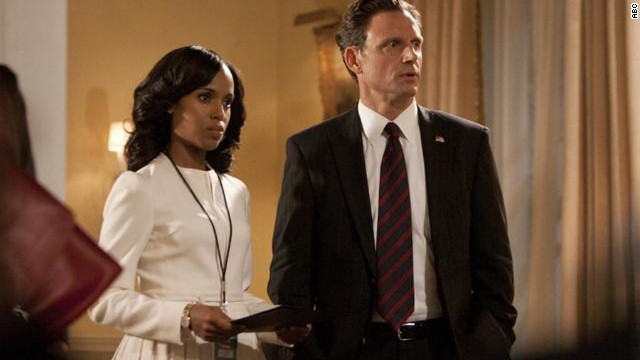
A few months ago on the popular TV series “Scandal,” the fictional President of the United States fell into the sunk cost trap:

We have to get Olivia back, not just because I love her, not just because having her out there is a threat to national security. There are soldiers who are never coming home because I tried to get her back. Someone’s father, someone’s husband. I have killed so many mothers’ sons trying to get her back. The flags placed on the coffins where they lay are there because they had the courage to give their lives and I did not have the courage to give Liv’s, so she has to come back because their sacrifice damn well has to mean something. They cannot have died for nothing. They cannot have gone to their death for no other reason than I asked them to.

If you’ll remember from my post about the sunk cost trap a couple of years ago:

The United States has invested much in attempting to achieve its objectives. In addition to the many millions of dollars that have been spent, many thousands of lives have been lost, and an even greater number of lives have been irreparably damaged. If the United States withdraws from Vietnam without achieving its objectives, then all of these undeniably significant sacrifices would be wasted.

Do you see the parallels?

Now, I totally get why the writers of Scandal couldn’t have the fictional President of the United States not continue to try and rescue Olivia Pope (how could there be a show without Olivia?), but I wish they didn’t have to write it in this way. In actuality, based on what he’s saying, it sounds like he’s come to the realization that sending more troops to war is a bad idea, so right there — right at the point — is when he should stop sending troops to war. Right then, he has the knowledge that continuing down the same path is the wrong thing to do, so he should stop. His rationalization for continuing is the sunk cost trap.

The thing that worries me is that by having things play out like this, it’s almost affirming that what the President is doing is the “right” thing or that it is the only choice he has. Certainly, there are plenty of other courses of actions he could have chose (many that probably wouldn’t make for good TV). Most people probably won’t find themselves in a situation where they’re forced to continue a war (or start a war, for that matter) for dubious reasons (or any reason, for that matter), but seeing stuff like this on TV, in a way, gives people an idea of how they can do things. I’d much rather popular entertainment actually err on the side of educating viewers, if it’s going to incorporate lessons of this nature.

I can already hear you yelling at me that this doesn’t make for good TV or entertainment (I know, I alluded to that earlier), but can’t we find a way to blend effective decision-making with entertainment, so that while we’re being entertained, we’re also learning something, too?

Where’s the Positive Music?

I’ve written before about the importance in choosing our words carefully (here and here) and so along those lines, today I’m interested in lyrics. Specifically, musical lyrics. A few months ago, there was a perfect tweet from Ezra Klein that captures my feelings on this matter:

https://twitter.com/ezraklein/status/551913397047287808

As a result, I’m interest in finding songs that are more along the lines of this one:

The lyrics:

I love myself the way I am,
there’s nothing I need to change
I’ll always be the perfect me
there’s nothing to rearrange
I’m beautiful and capable
of being the best me I can
And I love myself just the way I am

I love you the way you are
there’s nothing you need to do
When I feel the love inside myself
it’s easy to love you
Behind your fears, your rage and tears
I see your shining star
And I love you just the way you are

I love the world the way it is,
’cause I can clearly see
That all the things I judge are done
by people just like me
So ’til the birth of peace on earth
that only love can bring
I’ll help it grow by loving everything

I love myself the way I am
and still I want to grow.
But change outside can only come
when deep inside I know
I’m beautiful and capable,
of being the best me I can,
And I love myself just the way I am
I love myself just the way I am

Now that’s beautiful! A song about loving one’s self and the world. While it doesn’t have the same beat as anything you’d find on the radio today, singing those words over and over would be a far better affirmation than the songs that Klein is alluding to in the tweet above.

My question for you: are there songs out there like this one that have a more “positive” spin to them, but don’t necessarily invoke God? 

I say that because when I used to look for other songs like this one, I’d often find myself in Christian music. I have nothing against Christian music, I’d just prefer not to be continuously invoking Him or God, while I’m singing. I should say, I don’t mind a gentle nod or reference to God/Spirit like is done in this song by Josefs.